

Are the “Shoulds” Wearing You Out?
Oct 13, 2026
My recent trip to Scotland brought an unexpected reminder about co-parenting, showing up for your kids, and the small choices that matter after divorce.

I just got back from an amazing 10-day trip to Scotland. We went to see my son perform in the annual Edinburgh Fringe Festival, and then toured the country a bit as well (any other Outlander fans out there? 😉) .
And lucky me, my daughter and her boyfriend also planned their visit for that weekend. (The photo below is of me with both my kids and their respective partners.) Since my son lives in New York City now, and my daughter lives in Boston, it was so much fun to have all of us in one place.
During our planning, I found out that my ex-husband would also be visiting that same weekend. And honestly, writing about this makes me a little uncomfortable, because I don’t want to make this seem like a bigger issue than it was. We have always been able to be in the same place for our kids, and I know both of us are committed to showing up that way for them.
But I also admit to secretly sighing and wishing our weekends didn’t overlap. I bet he did, too.

As I planned the trip — and even more so while we were there — I kept thinking about how glad I was that we'd put in the effort early on, so we can still be in the same place for weekends and events like these. Obviously, after a 20-year marriage, there's a lot of water under the bridge that can get stirred up again with new interaction. Even though we have the benefit of the years since our divorce, I'm still proud of the way we choose to show up for our kids. It is a choice.
I believe most parents intend to do what’s best for their kids as they start the divorce process. But implementation can hit a wall when a parent decides they can’t (or won’t) tolerate the other person’s presence. Here’s a recent example. A couple I’m working with were struggling with how to handle back-to-school night since it was stressful for them to be in the same place. Could they split the event and each go to part of it?
My recommendation was that they both go to the 90-minute event. Sit on separate sides of the room. Talk to other people. Leave right afterwards if it feels better. But show your kids and yourselves that you are capable adults who recognize it’s in the kids’ best interest for both parents to be able to attend a school event.
One of the parents said, “But there are consequences of divorce.”
Yes. There absolutely are, and many of them are significant. So let’s not make them any greater than they already are.
I realize this sounds a little like tough love. And I am never suggesting that someone should put themselves in a situation where they feel physically or mentally unsafe. But I also challenge you to ask yourself if your actions truly reflect your desire to put your kids first.
Because here's what I have learned myself, and seen in the clients I work with over many years. Those small actions add up. They help you tap into strengths you haven't engaged in a while, courage that will impress and motivate you, and will likely contribute to outcomes you'll be proud to celebrate. Not just today, but down the road.
Our kids don't stop needing us when they turn 18. If we're lucky, we'll get to keep gathering, supporting, and loving each other in all kinds of ways — and you don't want anything, or anyone, to get in your way as you do.

My ex and I can barely be in the same room. Do we really both need to attend our child’s events?
Not every situation is the same, and I would never suggest putting yourself somewhere you feel unsafe. But if the issue is primarily discomfort, I would challenge you to separate “this is really hard for me” from “this is something I can’t do.”
You don’t have to sit together or even speak. Sometimes simply showing up, staying on opposite sides of the room, and letting your child have both parents there is enough.
Here I’ll share some of the books, websites, podcasts, and experts to help make your journey a little less shitty!
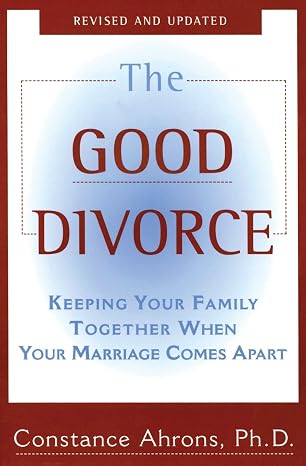
The Good Divorce by Constance Ahrons explores how families can continue to function, grow, and stay connected after divorce.
It’s a thoughtful reminder that ending a marriage doesn’t have to mean ending the family.